



TORONTO 2026 Special Presentations
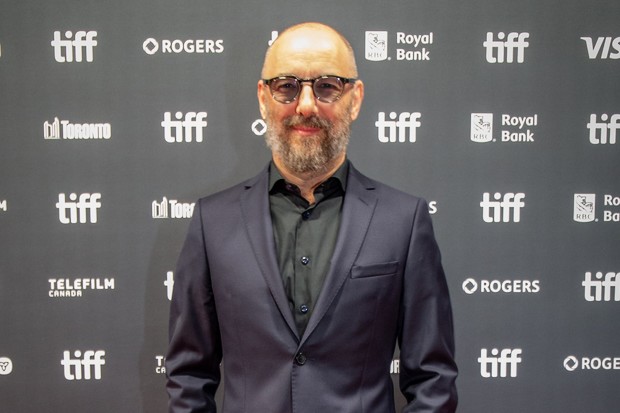
Michaël R. Roskam • Director de Le Faux Soir
"Estoy convencido de que las películas históricas hablan de nuestro presente"
por Aurore Engelen
- El cineasta belga nos habla de su película histórica, tan entretenida como vigente, sobre la resistencia y el poder de la sátira
Este artículo está disponible en inglés.
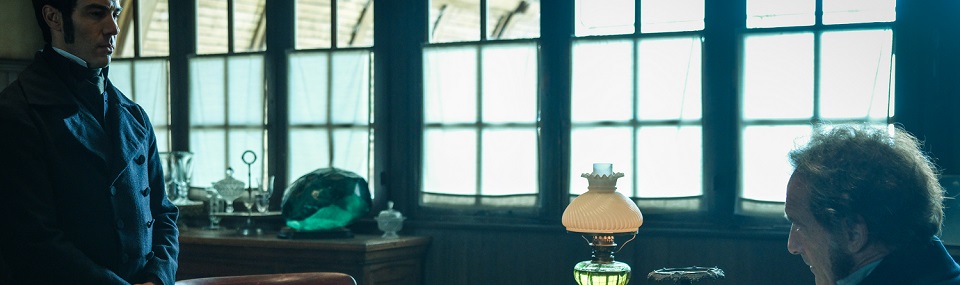
Michaël R Roskam is returning and taking us by surprise with Le Faux Soir, a delightful yet grave historical comedy about a “larger-than-life” act of resistance: the hijacking, right under the Nazis’ noses, of a daily newspaper distributed to thousands of readers. He spoke to us about the origins of his film, which was unveiled in a world premiere in Toronto before closing San Sebastián, as well as explaining his approach and how the work slots into Belgium’s history.
Cineuropa: How did you first come across the story of Le Faux Soir?
Michaël R Roskam: My co-writer Bernard Falaise told me about it for the first time while we were waiting outside the school that our kids attend! When he told me about the Faux Soir, I thought it was totally crazy - I had no idea about it - and I told him there and then that I really wanted to make this film. We then started working together, very organically. It’s a truly universal story, from the perspective of both space and time, and it really resonates with the modern-day world. I’m convinced that historical films, of all kinds, speak to our present, and this work raised fundamental questions around the freedom of the press, freedom of expression, and fake news, too. The fact that democracies have to protect the option of telling stories that differ from official accounts, whereas authoritarian regimes shut down that possibility and impose a single, uniform narrative.
What kind of film did you have in mind? It almost feels like a heist movie, in its planning and in the emphasis on the collective.
It’s actually about the first media hack in history - it’s a hacking movie! At the time, the paper was known to local people in Brussels as the “Le Soir volé,” which had been stolen by the Nazis who’d occupied the newsroom. And the idea the Resistance had was to steal it back. In that sense, it’s definitely a heist movie: you can see the hallmarks of the genre in the storytelling approach, the carefully planned strategy in the film, the courage displayed and the bit of luck that was involved, too. And obviously there’s the power of the collective. The people who organise the operation are ordinary people who turned into resistance fighters almost without realising it - heroes who didn’t choose to be heroes.
One of the tools the film uses to speak to a wide audience is a fairly unexpected reliance on humour - it’s a real comedy.
But the fake paper itself, at the time, was a satire: the writers cracked jokes, they mocked the Nazis. But that humour isn’t necessarily accessible today. So as soon as I started developing the film, I felt we had to pay tribute to that satirical tone by making a funny film. I kept saying it needed to be a serious film about funny people. And humour also allowed us to create a genuine, empathic bond with the characters, to make audiences care about them and fear for them. And for them to be a bit of an inspiration, so that we’d say to ourselves: if I’d been in their shoes, I hope I would have had the courage to do what they did.
How did you preserve the film’s entertaining side, given its complicated plot?
We did huge amounts of research and tried to be as thorough as possible. I became deeply interested in how rotary press printing works, because those technical details are at the heart of the story, they determine whether the plan succeeds. So we had to find a way of sharing that technical focus with the audience without sliding into didacticism. That was very important to me. We allowed ourselves a little fiction, for dramatic tension, but we still based everything on real facts. For example, it’s been established that the printer the resistance worked with was also the printer used by Léon Degrelle, who was a collaborator and founder of the fascist Rex movement.
The machines are also brought to life by the film’s original score, composed by French musician Chassol.
Chassol has invented a way of making film music which he calls ultrascores, which incorporate sounds from the film itself into the final musical composition. It was exactly what I wanted, and I think it sounds incredible. It brings the machines to life, and on top of that, he also managed to compose a comedic score which was perfectly in keeping with the film.
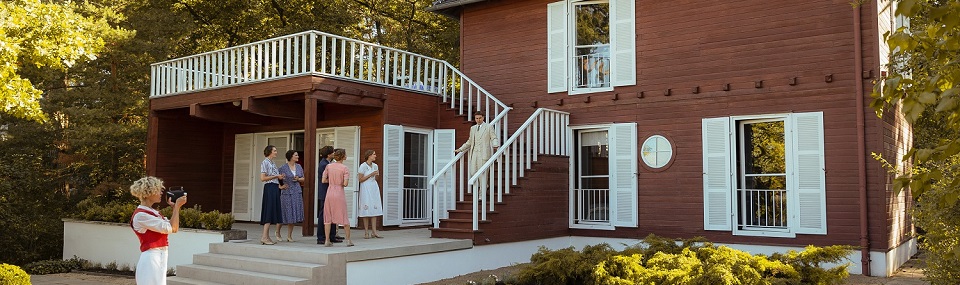
The film is a kind of love letter to Brussels, right down to its imagery which is sometimes reminiscent of comic books.
I arrived in Brussels to study in the mid-1990s. I think Brussels is a magnificent city, but it’s the inhabitants who really make it what it is and who form part of its DNA, and I wanted my characters to be real Brussels people. They’re the ones who make it beautiful, but also funny, absurd, surreal. When I enrolled at the Beaux-Arts, my dream was to create comics or graphic novels. Comics were at the heart of Belgian identity, whereas at the time, cinema felt far off. But I rediscovered my love of comics when I was pinning down the film’s art direction: I wanted to rediscover the Brussels of Quick et Flupke, and treat the city the way Tardi did with Paris, taking a slightly noir yet light-hearted approach.
(Traducción del francés)
¿Te ha gustado este artículo? Suscríbete a nuestra newsletter y recibe más artículos como este directamente en tu email.